Summary
Compare apartment orientation, balconies, and floor levels in Curitiba to choose a bright, comfortable furnished rental for your extended stay.
Does Apartment Orientation Matter in Curitiba? How to Compare Sunlight, Balconies and Floor Level
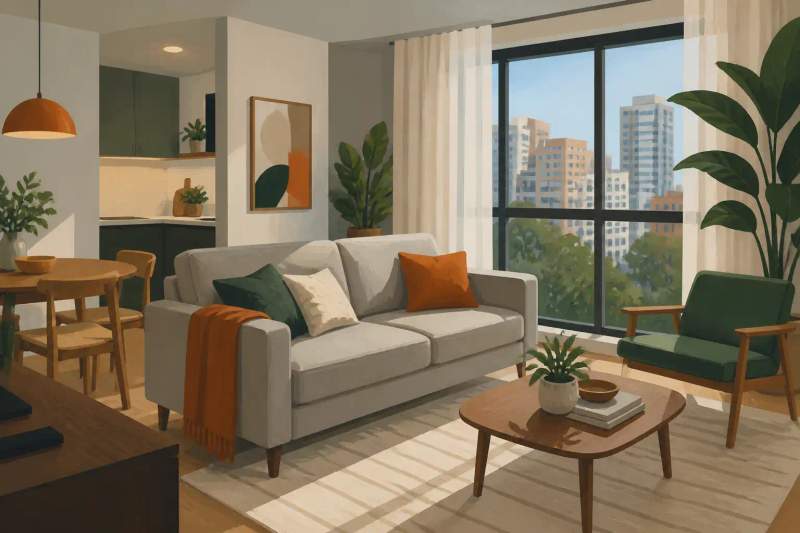
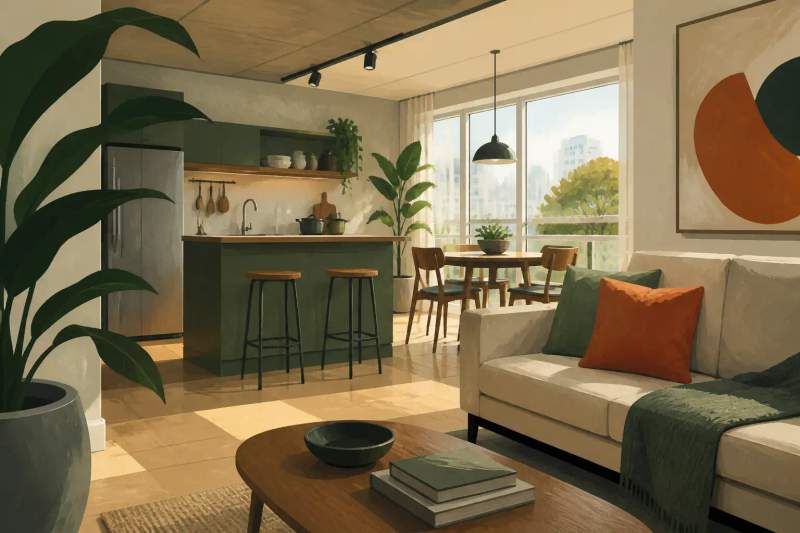
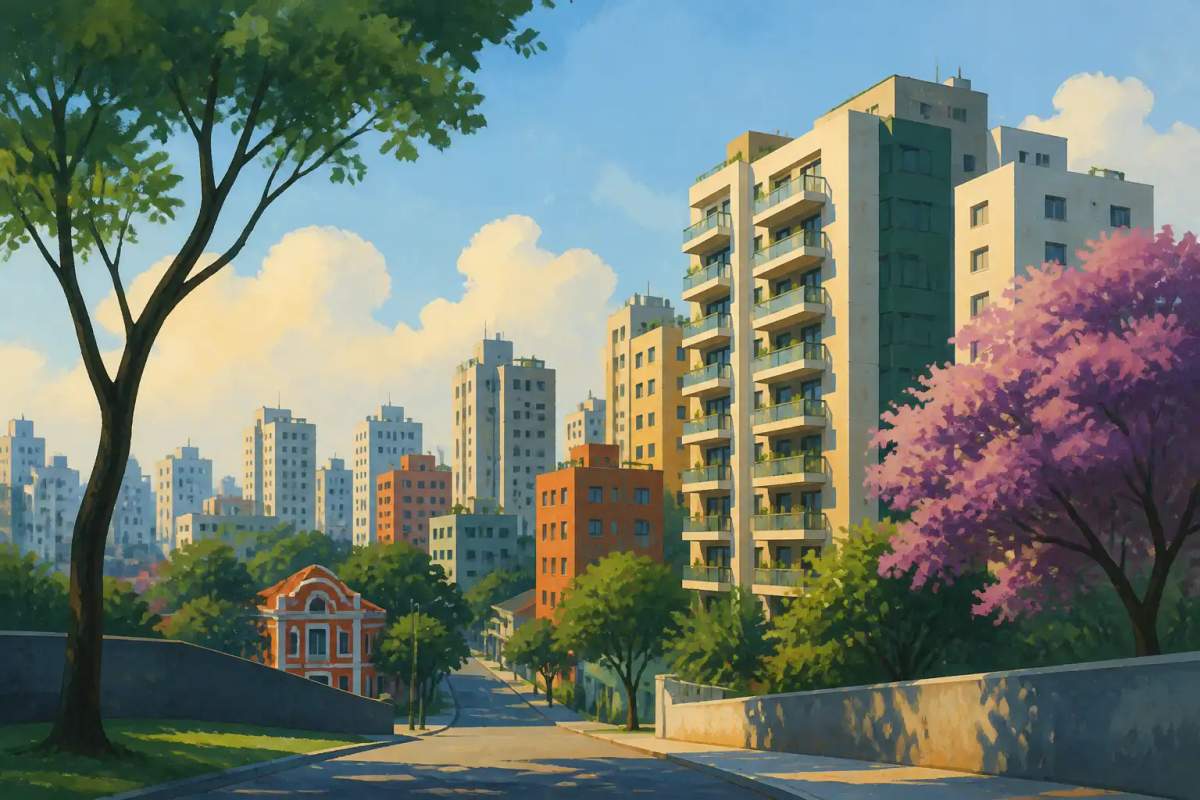
Two furnished apartments in the same Curitiba building can provide very different living experiences. The direction the windows face, surrounding buildings, floor level and balcony design can affect natural light, afternoon warmth, privacy and how comfortable the apartment feels throughout the day.
These details become particularly important during a stay of several months. A studio that looks bright in professional photos may receive direct sunlight only briefly, while another unit in the same development may have more open exposure.
This guide explains how to compare orientation, balconies and floor level in Shortstay listings without assuming that one option will be best for everyone.
TL;DR
Apartment orientation matters, but it should not be evaluated alone.
In Curitiba:
- North-facing units generally have greater potential for direct sunlight throughout the year.
- East-facing apartments tend to receive morning sun.
- West-facing units may receive stronger afternoon sunlight and feel warmer later in the day.
- South-facing apartments generally receive less direct sunlight.
- Corner units with two orientations can provide different light conditions in separate rooms.
- Higher floors may have fewer visual obstructions, but they are not automatically brighter or quieter.
- A balcony does not guarantee direct sunlight, an open view or permission to dry clothes.
Verdict: Recommended to consider orientation when choosing a furnished apartment for several months. Selecting an apartment solely because it is described as north-facing or located on a high floor is Not recommended.
What does “north-facing” or “east-facing” mean?
Shortstay listings may identify an apartment as facing north, south, east or west. This usually describes the direction of its principal windows, balcony or main living area.
However, the label may not explain every room. A corner apartment can have windows facing two directions, while the bedroom and living room may receive different types of light.
Before booking, confirm:
- Which room faces each direction
- Whether the balcony has the same orientation as the main windows
- Whether another building blocks the sunlight
- How deep the balcony is
- Whether the apartment is a corner or internal unit
- The exact floor
- Whether the windows face the street, an internal courtyard or another tower
Orientation indicates the apartment’s position. It does not guarantee the number of hours of direct sunlight.
How each orientation may affect the apartment
Because Curitiba is in the Southern Hemisphere, north-facing façades generally have greater potential for direct sunlight over the year. Actual conditions still depend on the season, surrounding buildings and the apartment’s design.
| Orientation | Typical light pattern | Possible advantage | What to confirm |
|---|---|---|---|
| North | Greater potential for sunlight during the day | More consistent natural light | Obstructions, window size and room orientation |
| East | Morning sunlight | Pleasant for early routines and morning work | How long the light reaches the interior |
| West | Afternoon sunlight | Useful for residents who use the apartment later in the day | Heat, glare and blackout curtains |
| South | Usually less direct sunlight | May avoid intense afternoon sun | Real brightness, ventilation and surrounding towers |
| Two directions | Different exposure across rooms | Potentially more varied light and ventilation | Which room faces each direction |
These are general tendencies, not promises. Trees, neighboring towers, balcony depth and window placement can change the result substantially.
North-facing apartments
A north-facing apartment may appeal to residents who prioritize natural light or expect to spend much of the day at home.
The All You Need unit CB-0034, for example, is identified as north-facing. It is a compact studio in central Curitiba, making it an example of how orientation can become particularly relevant in a small space where the main window serves the entire apartment.
However, the north-facing description alone does not confirm:
- Whether direct light reaches the bed or work area
- Whether another building creates shade
- Whether the window has blackout curtains
- How the light changes between winter and summer
- Whether the apartment becomes warmer during sunny periods
Verdict: Recommended for residents who value the possibility of more consistent sunlight, provided the actual exposure is confirmed.
It is Not recommended to assume that every north-facing apartment will be warm, unobstructed or bright throughout the day.
East-facing apartments
East-facing units generally receive their strongest direct light during the morning. This can work well for someone who wakes early, works from home during the first part of the day or prefers less intense afternoon sunlight.
The Lifespace Curitiba unit CB-0736 is presented as east-facing. Its listing highlights softer natural light during the morning.
An east-facing apartment may be worth considering for:
- Early risers
- Residents who work from home in the morning
- People who prefer less direct afternoon sun
- Anyone who enjoys a brighter breakfast or morning routine
Morning orientation does not guarantee that the apartment will remain bright all afternoon. Indirect light may still be sufficient, but that depends on window size, interior colors and nearby buildings.
Verdict: Recommended for morning-oriented routines.
West-facing apartments
West-facing apartments usually receive more direct sunlight later in the day. This may be useful for someone who works outside during the morning and returns in the afternoon.
The same exposure can also create glare or make the apartment feel warmer during sunny afternoons. The effect depends on the season, glazing, curtains, ventilation and whether the windows are shaded.
West-facing exposure may be Worth considering for residents who:
- Spend more time at home after lunch
- Prefer afternoon light
- Want natural light at the end of the working day
- Do not mind using curtains during brighter periods
Before reserving, ask whether the unit has:
- Blackout curtains
- Solar-control blinds
- Air conditioning or a fan
- Windows that can be opened
- A deep or covered balcony
- Unobstructed western exposure
Verdict: Worth considering, but evaluate afternoon heat and glare instead of treating the orientation as automatically positive or negative.
South-facing apartments
South-facing apartments generally have less direct sunlight in Curitiba. That does not mean they are necessarily dark or uncomfortable.
A large window with an open view may provide abundant indirect daylight, while a north-facing unit behind another tower may receive much less light than expected.
The Maxi Studios unit CB-0455 is identified as south-facing. For a compact studio, the practical questions are whether the principal window has an open view, how bright the interior appears outside the listing photos and whether ventilation is adequate.
A south-facing unit may suit someone who:
- Does not want strong afternoon sunlight
- Uses the apartment mainly at night
- Prefers more stable indirect light for computer work
- Is sensitive to glare
- Prioritizes location or monthly cost over direct sun
Verdict: Worth considering when the actual brightness and ventilation meet the resident’s needs.
Rejecting every south-facing apartment without reviewing its windows, floor and surroundings is Not recommended.
Apartments with more than one orientation
Corner units may have windows facing two directions. This can create different light patterns across the day and may help separate the conditions in bedrooms and living areas.
The Metropolitan unit CB-0680, for example, is described as facing north and west. This combination may provide sunlight at different times, but it is still important to establish which room faces north and which receives western afternoon exposure.
The Arch Boa Vista unit CB-0789 combines east and south exposure. The apartment is located on the 12th floor and includes a balcony, two bedrooms, a washing machine and a parking space.
This illustrates why the complete configuration matters more than one label. One room may receive morning sun while another relies primarily on indirect light.
When evaluating a unit with two orientations, ask for:
- The orientation of each bedroom.
- The direction of the living-room windows.
- The balcony orientation.
- Whether any façade is blocked by another tower.
- Which rooms receive direct sunlight.
Verdict: Recommended for residents who want varied exposure, after confirming the layout.
Does a higher floor mean more sunlight?
A higher floor may have fewer nearby obstructions, especially when surrounding buildings are lower. It may also provide a more open view.
Nevertheless, a high floor does not automatically guarantee:
- More direct sunlight
- Less street noise
- Better ventilation
- Greater privacy
- A cooler apartment
- An unobstructed view
The building’s position and surrounding development remain decisive. A 12th-floor unit can still face a nearby tower, while a lower apartment may overlook an open street or garden.
The Arch Boa Vista example combines a high floor, balcony and two orientations. Those features make it useful for comparison, but the resident should still review the actual view, balcony enclosure and window placement.
Higher floors may also involve practical trade-offs:
- Greater dependence on elevators
- More noticeable wind on balconies
- Longer access time
- Different street-noise patterns
- Greater exposure to weather
- Additional attention to balcony safety for children or animals
Verdict: Worth considering when an open view and greater distance from ground-level activity are priorities.
Choosing the highest available floor without evaluating access, wind, windows and neighboring towers is Not recommended.
Does a balcony make the apartment brighter?
A balcony can extend the usable space and provide an outdoor area, but its effect on natural light varies.
A deep covered balcony may shade the living room. A smaller open balcony may admit more direct sunlight. Balcony walls, railings, glazing and the building above can also affect the amount of light entering the apartment.
The Residence Batel unit CB-0676 combines an east-facing position with a balcony. This may appeal to someone who wants morning light and a small outdoor extension to the studio.
Before treating a balcony as an advantage, verify:
- Whether it is private
- Whether it is covered or open
- Its orientation
- Whether it has an unobstructed view
- Whether it is furnished
- Whether windows or doors open fully
- Whether protective netting is installed
- Whether animals are permitted
- Whether smoking is permitted
- Whether clothes may be dried there
- Whether building rules restrict visible items
- Whether strong wind affects its use
A balcony can be valuable even without direct sun, particularly for ventilation or a brief outdoor break. Its usefulness depends on the resident’s routine.
Verdict: Recommended when the balcony has a clear purpose for the stay.
Paying more simply because the listing includes a balcony—without checking its dimensions, shade and rules—is Not recommended.
Natural light for working from home
Orientation can affect a home-office routine, but direct sunlight is not always the ideal condition for computer work.
Strong light behind or in front of a screen can create glare. A bright apartment may require curtains during video calls, while a unit with consistent indirect light may provide a more comfortable workspace.
For remote work, compare:
- Position of the desk in relation to the window
- Availability of blackout or translucent curtains
- Electrical outlets near the work area
- Internet conditions
- Artificial lighting
- Street noise
- Whether the balcony door is close to the desk
- Direct afternoon glare
- Ability to ventilate the room
An east-facing apartment may provide pleasant morning light, while a west-facing window could affect the screen later in the day. A south-facing unit with a large unobstructed window may offer more even indirect light.
Verdict: Recommended to evaluate the actual work area rather than choosing by orientation alone.
Orientation and indoor plants
Plant owners should not assume that a north-facing label means every part of the apartment receives enough direct light.
The relevant factors include:
- Distance between the plant and the window
- Balcony shading
- Window glass and coatings
- Nearby buildings
- Seasonal changes
- Whether curtains remain closed
- The plant’s specific light requirements
An east-facing balcony may work for plants that tolerate gentler morning sun. Western exposure may be too intense for some species and appropriate for others.
Ask for a current photo or video showing the window and surrounding buildings. If plants are essential to the stay, confirm that building rules allow them on the balcony.
Orientation and drying clothes
Direct sunlight may help with drying, but orientation alone does not determine whether residents can dry clothes efficiently.
Check whether the apartment has:
- A private washing machine
- A shared building laundry
- A dryer
- A drying rack
- A service area
- A ventilated bathroom
- Permission to place a rack on the balcony
Some Shortstay units include a washing machine, while others rely on shared laundry facilities. Balcony rules may prohibit visible clothes even when the space receives sunlight.
The Via Lactea development offers examples of units with different orientations. The Via Lactea unit CB-0625, for example, is described as north-facing and includes a private balcony and washing machine. Those features may be convenient, but residents should still confirm where clothes may be dried.
Verdict: Recommended to check the complete laundry arrangement instead of assuming that a sunny balcony solves the issue.
Why units in the same building can feel different
Listings within one development may differ in more than furniture and decoration.
| Variable | Possible effect |
|---|---|
| Orientation | Changes the time and potential intensity of direct sunlight |
| Floor level | Changes surrounding obstructions, views and exposure |
| Corner position | May provide windows on more than one façade |
| Balcony depth | Can admit or block direct sunlight |
| Window size | Affects the amount of natural light |
| Nearby tower | May shade the apartment or reduce privacy |
| Street-facing position | Can change views and noise conditions |
| Internal position | May provide less street exposure but a more restricted outlook |
| Curtains | Affect glare, darkness and privacy |
| Interior colors | Can make the same amount of light feel different |
For this reason, information about one Shortstay unit should not be applied automatically to every apartment in the same building.
A practical comparison by resident profile
| Resident profile | Orientation or feature to consider | Main caution | Verdict |
|---|---|---|---|
| Early riser | East-facing windows | Light may decrease after the morning | Recommended |
| Works from home all day | Open exposure with controllable curtains | Direct sun may cause screen glare | Recommended |
| Uses the apartment mainly after lunch | West-facing windows | Check afternoon warmth and blackout | Worth considering |
| Wants more potential direct sunlight | North-facing exposure | Verify neighboring obstructions | Recommended |
| Prefers less intense afternoon sun | East or south exposure | Confirm actual daylight levels | Worth considering |
| Wants outdoor space | Private balcony | Check size, wind, shade and building rules | Recommended |
| Prioritizes a view | Higher floor with open surroundings | High floor does not guarantee an open view | Worth considering |
| Has indoor plants | Verified direct or indirect light | Orientation alone is insufficient | Worth considering |
| Is sensitive to light while sleeping | Effective blackout curtains | Direction is less important than window treatment | Recommended |
How to compare the full apartment
Use a table like this when reviewing Shortstay options:
| Criterion | Option A | Option B | Option C |
|---|---|---|---|
| Orientation | — | — | — |
| Floor | — | — | — |
| Balcony | — | — | — |
| Open or obstructed view | — | — | — |
| Morning sunlight | — | — | — |
| Afternoon sunlight | — | — | — |
| Blackout curtains | — | — | — |
| Windows that open | — | — | — |
| Street or internal exposure | — | — | — |
| Private washing machine | — | — | — |
| Shared laundry | — | — | — |
| Air conditioning or fan | — | — | — |
| Monthly package | R$ — | R$ — | R$ — |
| Separate expenses | R$ — | R$ — | R$ — |
Orientation should be treated as one part of the comparison. Location, total monthly cost, furniture, internet, laundry and contract terms may have a greater impact on the stay.
Questions to ask before reserving
Request the following information in writing:
- What is the exact floor?
- Which direction do the main windows face?
- Which direction does the bedroom face?
- Does the balcony have the same orientation?
- Is the view blocked by another building?
- At what time does the apartment normally receive direct sunlight?
- Are blackout curtains installed?
- Can the windows be opened?
- Does the unit face the street or an internal area?
- Is the balcony covered or enclosed?
- Are there rules about drying clothes on the balcony?
- Is protective netting installed?
- Can a current video or virtual tour be provided?
- Does the unit have a washer, dryer or shared laundry?
- Are any utilities or services charged separately?
Answers may vary between apartments in the same building, so record the unit code when requesting confirmation.
Common mistakes to avoid
Assuming north-facing is always best
North-facing exposure may provide more potential sunlight, but it can be blocked or become more intense than a particular resident prefers.
Believing a high floor is always quiet
Sound can travel differently at higher levels. Street layout, traffic, construction and neighboring units also affect noise.
Treating every balcony as sunny
The balcony may face south, sit behind another tower or be shaded by the floor above.
Comparing only professional photos
Listing photos may be captured at the brightest time of day with curtains open and artificial lights on. Review the floor plan, orientation and virtual tour as well.
Applying one unit’s conditions to an entire building
Two apartments in the same development may face opposite directions or sit on very different floors.
Ignoring glare
More sunlight is not always more comfortable, especially when it reaches a television, bed or computer screen.
Assuming ventilation from orientation
Airflow depends on window openings, building position and weather. A direction label does not guarantee cross-ventilation.
Paying more for features that will not be used
A balcony or high floor may not justify a higher package if the resident prioritizes location, laundry or a separate bedroom.
Quick verdict
| Feature | Main benefit | Main limitation | Verdict |
|---|---|---|---|
| North-facing | Greater potential for direct sunlight | Can still be shaded | Recommended |
| East-facing | Morning light | Less direct afternoon sun | Recommended |
| West-facing | Afternoon light | Possible heat and glare | Worth considering |
| South-facing | Less intense direct exposure | May receive less direct sunlight | Worth considering |
| Two orientations | Varied light across rooms | Requires room-by-room confirmation | Recommended |
| High floor | Potentially more open exposure | No guarantee of quiet or views | Worth considering |
| Private balcony | Outdoor extension and possible ventilation | Shade, wind and rules may reduce usefulness | Recommended |
| Listing photos only | Fast initial impression | Do not show every season or time of day | Not recommended |
Frequently asked questions
Which apartment orientation is best in Curitiba? There is no universally best orientation. North may suit someone who wants more potential sunlight, east may work for morning routines, and south may appeal to residents who prefer less intense direct exposure.
Does a north-facing apartment receive sunlight all day? Not necessarily. The season, floor, nearby buildings, window position and balcony design can block or limit direct sunlight.
Is an east-facing apartment good for working from home? It can be, especially during the morning. Confirm the desk position, afternoon brightness, curtains, internet and noise conditions.
Are west-facing apartments too hot? They may receive stronger afternoon sunlight, but the actual temperature depends on shading, ventilation, curtains, glazing and weather. It cannot be determined by orientation alone.
Is a south-facing apartment always dark? No. A south-facing unit with large windows and an open view may receive substantial indirect daylight.
Is a higher floor always brighter? No. Higher floors may have fewer obstructions, but surrounding towers, balcony depth and window direction still determine the result.
Does a balcony increase natural light? Sometimes. A deep or covered balcony may shade the interior, while a smaller open balcony may allow more light.
Can I dry clothes on a Shortstay balcony? That depends on the building and unit rules. Confirm whether balcony drying is permitted and whether the apartment provides a rack, washer or shared laundry.
Do all apartments in the same Shortstay building have the same orientation? No. Units can face different directions and have different floor levels, windows, balconies and surrounding obstructions.
Can I rely on listing photos to evaluate sunlight? Photos are useful for an initial assessment but should be combined with orientation, floor information, a floor plan and a current video or virtual tour.
Final verdict
Apartment orientation can materially affect a stay in Curitiba, especially for residents who work from home, care for plants, value morning light or expect to spend several months in the same unit.
North-facing apartments generally offer greater potential for direct sunlight. East-facing units tend to favor morning routines, while western exposure may provide more afternoon light. South-facing apartments should not be dismissed automatically because window size, floor level and surrounding buildings can be more important than direction alone.
Balconies and higher floors are Recommended when they serve a clear purpose and their actual conditions have been confirmed. Choosing solely by orientation, floor number or listing photos is Not recommended.
The best approach is to compare the exact Shortstay unit—not only the building—and request written confirmation about its windows, floor, balcony, view, curtains and laundry arrangements before reserving.
The listing details referenced in this guide were reviewed in August 2026. Availability, furniture, orientation information and building conditions may change, so confirm the current details for the selected dates and unit.
Related guides
- How to compare Shortstay apartments in the same Curitiba building
- What is included in a furnished apartment in Curitiba?
- How to choose a furnished apartment for working from home
- Balcony or extra bedroom: which feature is more useful?
- How to inspect a furnished apartment before moving in